
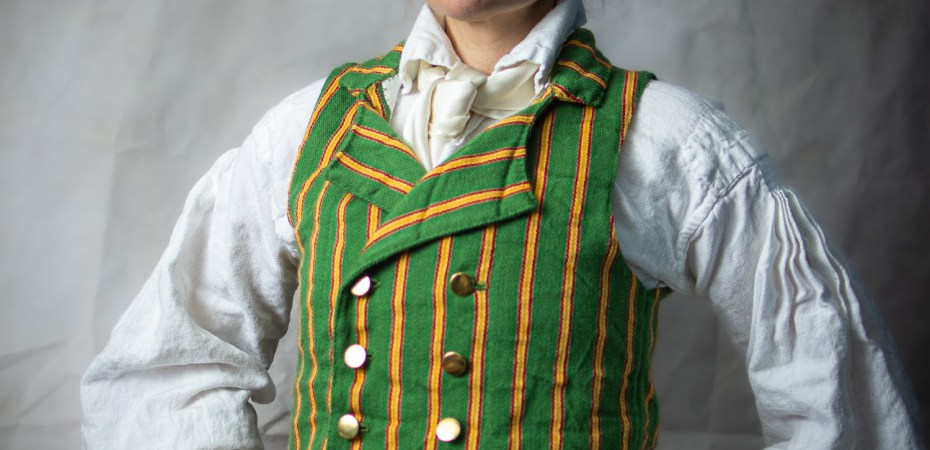
The last blog was about the fabric I did weave for the Gambämark cosplay I did. You can read it here. Although the fabric was very beautiful there was a problem. I did weave the fabric in 2/1 twill and although twills were used in the folkdräkt fabrics it has one big flaw. The stripes did not really stand out as much as I would like.
As a perfectionist I wanted to do something about that. Two weaving techniques still used in folk costumes from the region that give a better contrast are rips and 4-shaft atlas. Luckily the book I bought in Helsinki gave me hints on how to set up this project. As this would once again be a very elaborate project with a weaving width of at least 126cm I first set up a testing weave of 20 cm where I could test 4-shaft atlas and rips. Setting up 4 shafts with thread in 1234 can be used for both weaving types.
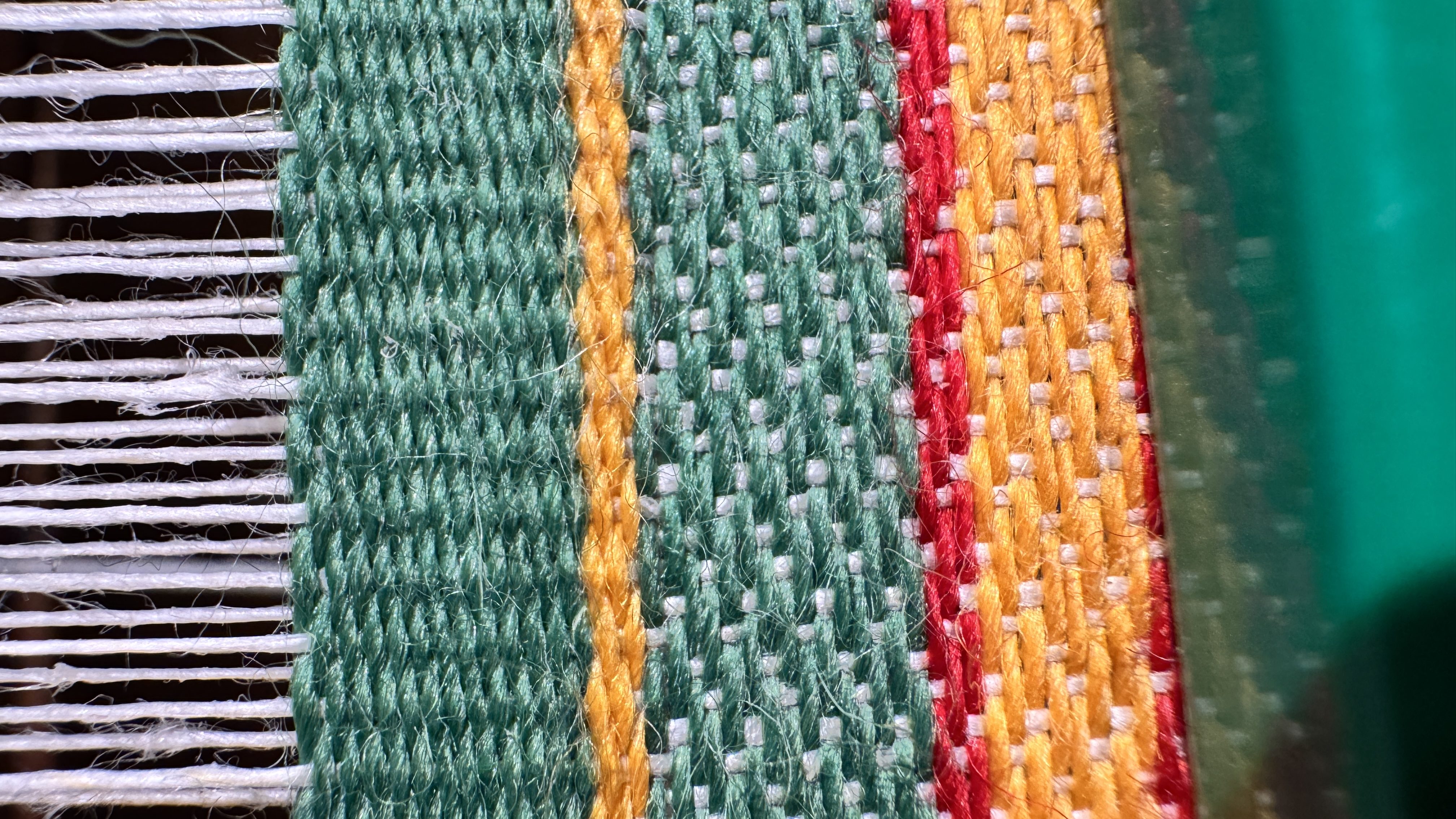
Rips is a very simple weaving type that only requires two shafts. The warp is thinner than the weft and the spacing between threads is quite big. This means that the weaving type is what is called weft dominant. Only the weft is visible. In this way you get very clear stripes.
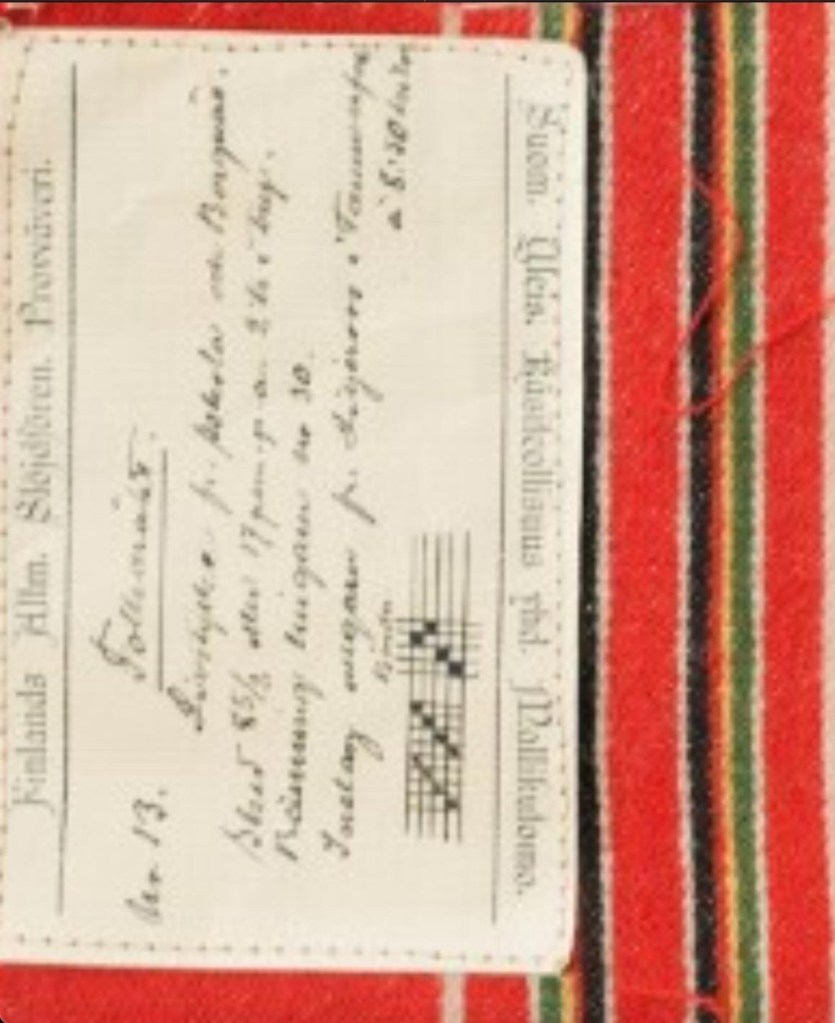
4-shaft atlas is bit different. It is also called false or poor mens atlas because it resembles atlas or satin, but does not follow the rules from atlas/satin. I was lucky to find a picture of a sample fabric with notes on the weave on the digital museum website of the finlansdsvenska dräktburo. The threading is a repeat of shafts 1234 and the weaving is done by 1243. This gives a satin effect with only 4 shafts.
During the testing the rips was by far the most contrasting fabric, but I also thought it looked a bit too clean and like modern ribbons. Also the 4-shaft atlas is the most common weaving for what I was going for. Although Rips would mean only 630 threads needed for the whole project I decided for 4-shaft atlas with 1260 threads.

At the same time KAJ posted a little reel where the two original waistcoats were shown and it hit me that the normal Gambämark waistcoat stripes are different from the Bäriking waistcoat stripes. Normal is red-yellow-red while the bäriking is black-yellow-black. This meant I also needed some black yarn. I dyed some white yarn I had lying around black and was ready to start weaving.

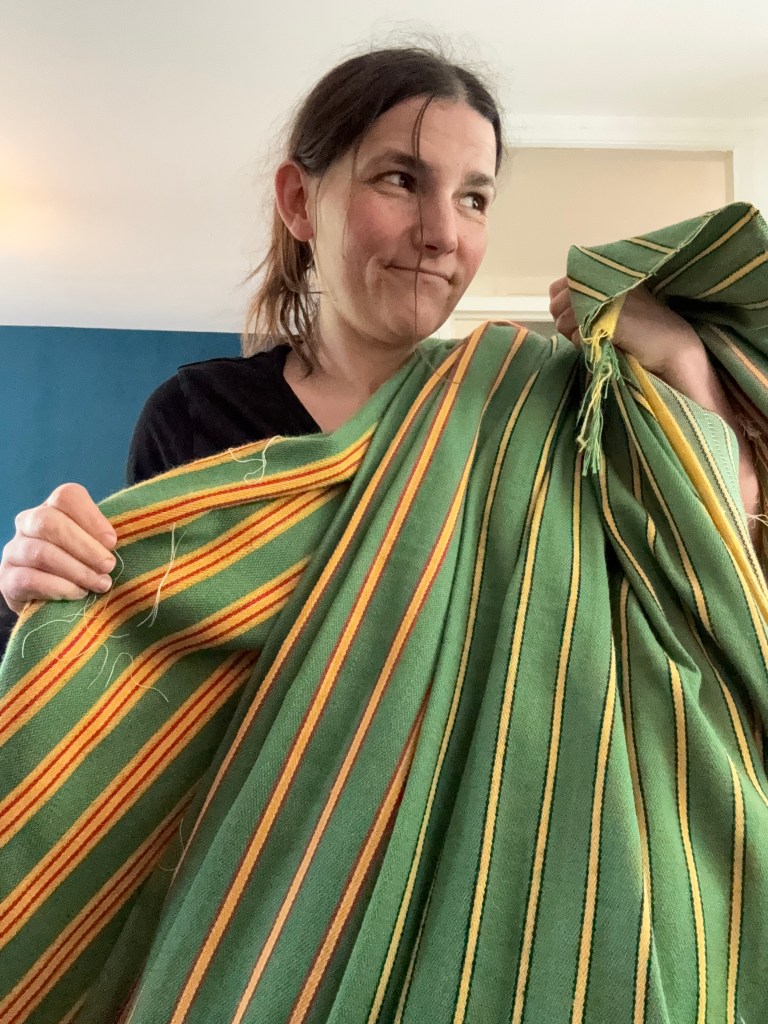
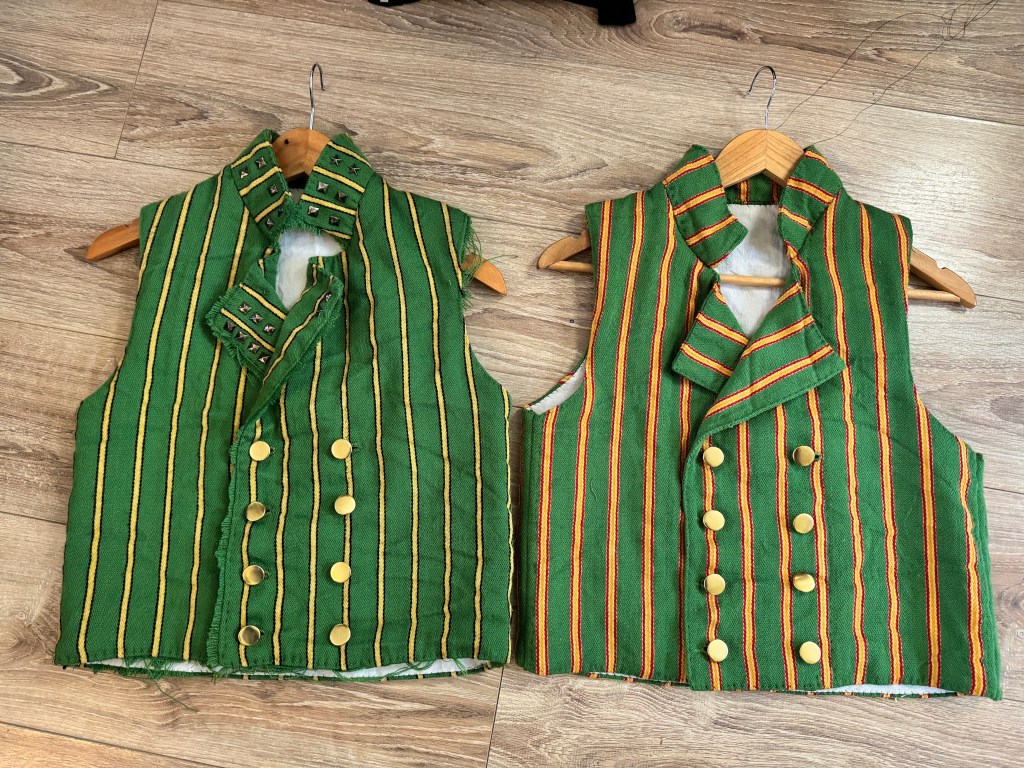
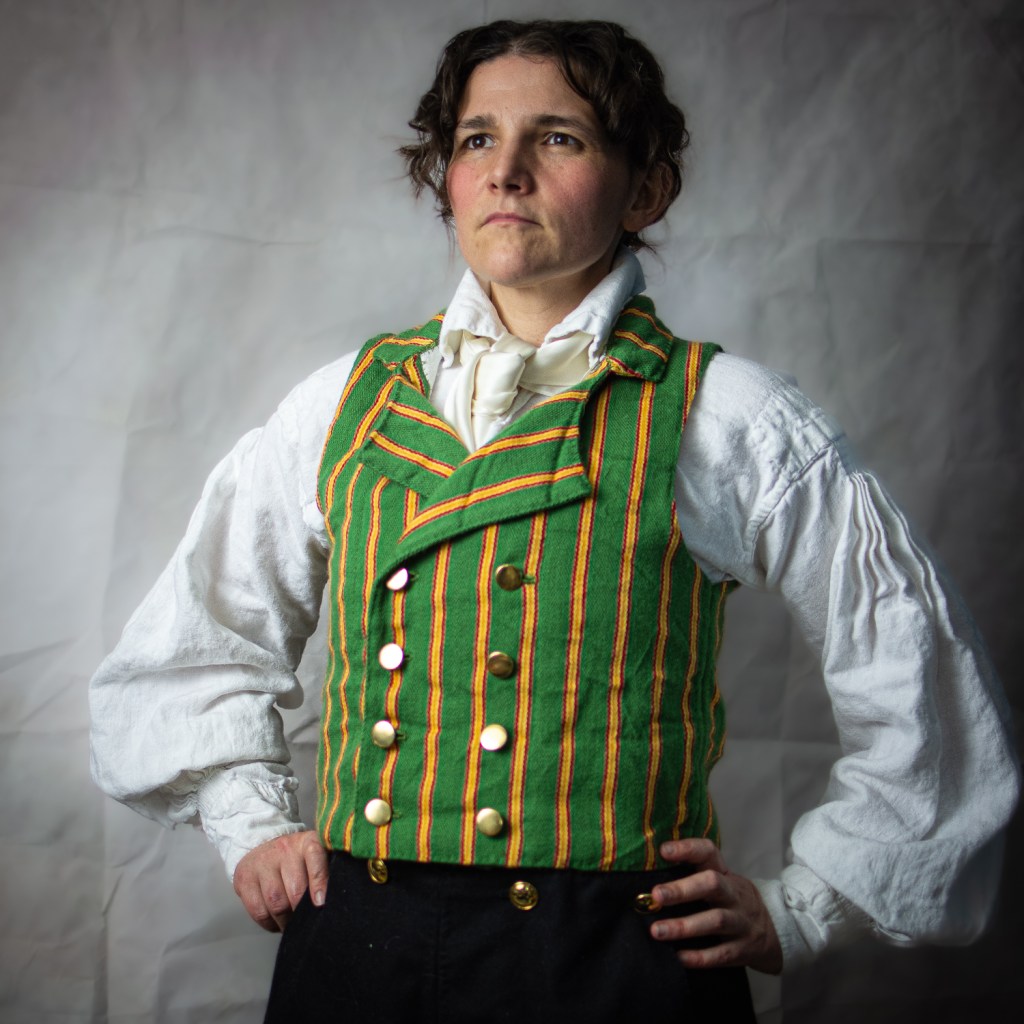
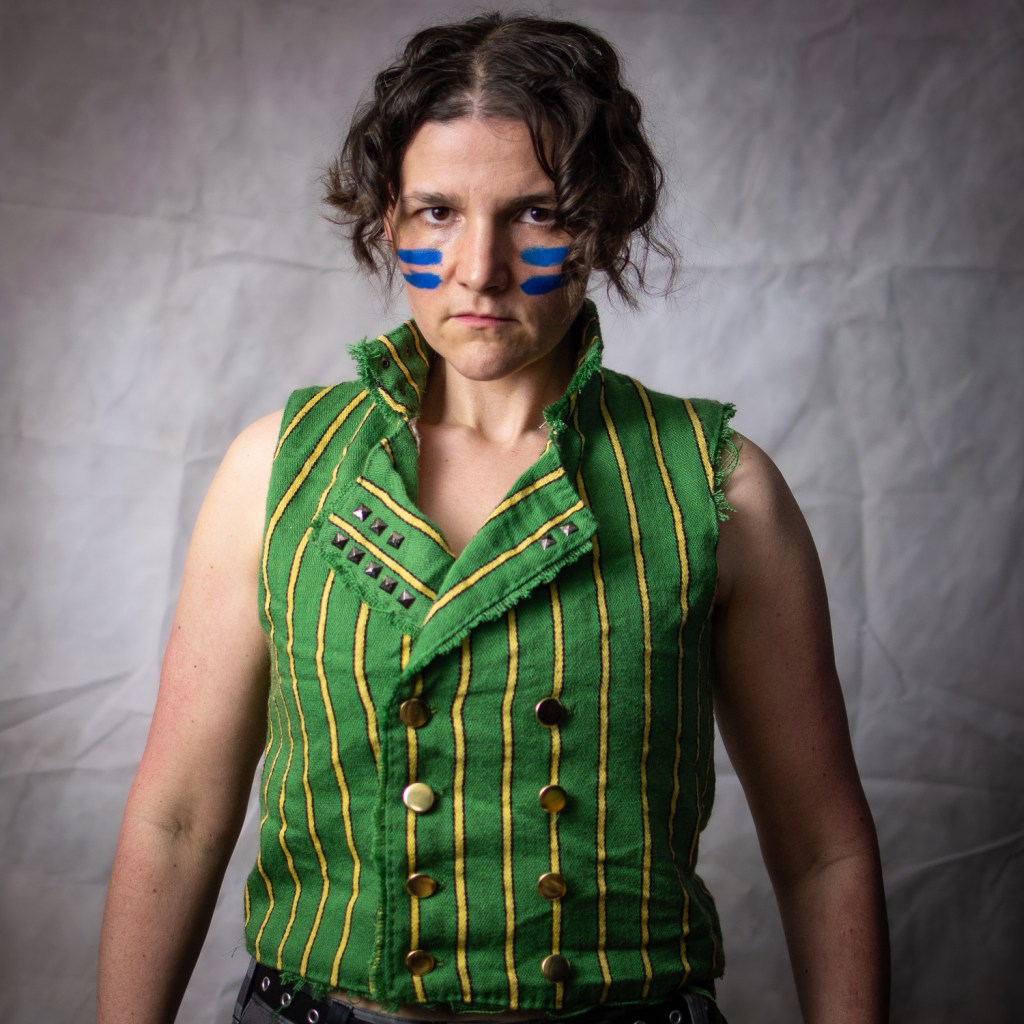
The 4-shaft atlas has given me a very nice smooth fabric and turned into two very nice waistcoats. I also made a bit of the Kurt fabric, so if I want, I can also make a Kurt Bymann waistcoat. The Bäriking one also has studs and damage. The damage was added as an extra layer from the first fabric. I think it turned out nicely and this perfectionist is rather happy with the end result!


Fenomenaal !
LikeLike