
Often I get the question where to start when making medieval clothing. I found out that just providing a pattern is not always the best solution. Clothing is a product of its time and although a 13th century dress and a 8thcentury dress might look similar at first glance they have some crucial differences in the details. So to make a dress you need more background information about not only materials, sewing and patterns but also about the period esthetics.
The most important lesson I can give is: Do not assume that what other reenactors are wearing is correct. There is this thing called re-enactorisms: errors that have crept into the community that are very hard to get out again. For clothing there are a lot. (15th century men who ubiquitously wear some kind of sleeveless bodywarmer thingie… I am looking at you! They are scarce in the sources and only worn by men doing super warm or dirty labour)
How I mostly start is by looking at primary sources to see what I want to make and what fits the status I want to portray. When I know what I want to recreate I look in my books to see if I can find patterns that fit the image I want to recreate.
Here I will provide my favourite books, sites and other sources with the reasons why I like them. Hoping they can give a kickstart to the rabbit hole that historical costuming is. I will update this list when necessary.
High and late medieval period 1200-1500
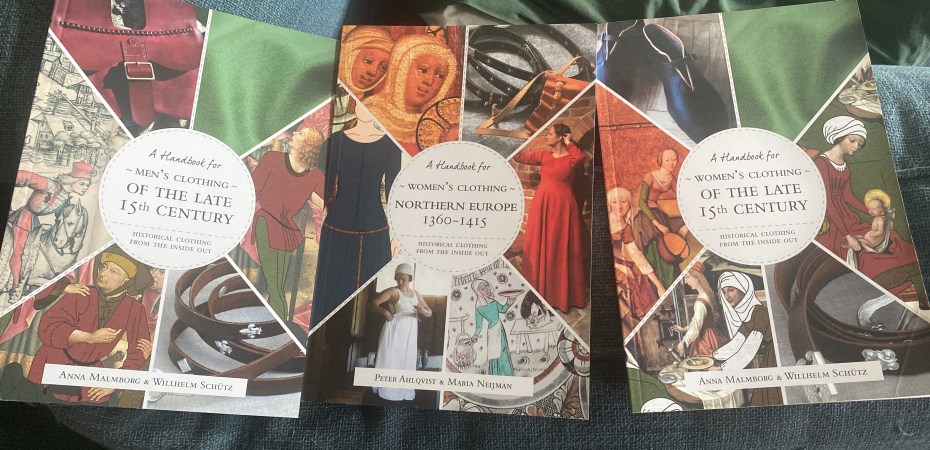
A handbook for …
- -A handbook for women’s clothing Northern Europe 1360-1415 – Peter Ahlqvist and Maria Neijman
- -A handbook for women’s clothing of the late 15th century – Anna Malmborg and Wilhlem Schütz
- -A handbook for men’s clothing of the late 15th century – Anna Malmborg and Wilhlem Schütz
Chronocopiapublishing.com
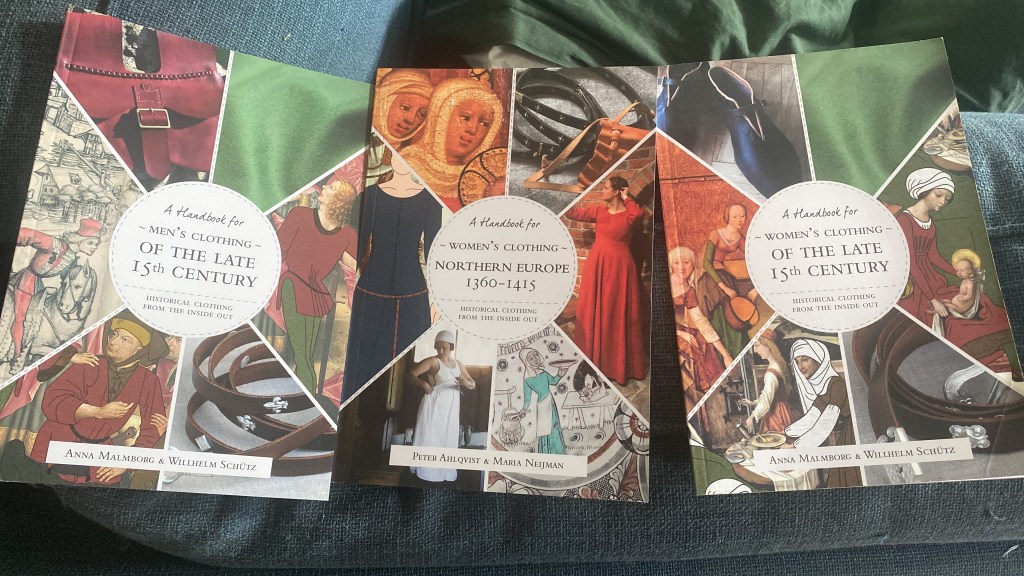
These books are a series of three. The best part about these books is that they are simple but complete guides for beginners. A bit of context of the period is given and introductions to materials, colours and sewing techniques are provided. All the clothing pieces that are part of a full wardrobe are described and patterns are shown. Lots of attention for accessories and details of the wardrobe.
The only down side is that as a complete sewing-beginner the images of patterns might be a bit overwhelming, because you need to calculate the pattern for your body by yourself. You might need help from a more experienced person for this. Other negative part is that they are hard to come by. I ordered my copies from Sweden.
Um 1504
http://www.um1504.de
isbn: 978-3-88190-957-0

This one is especially made for beginners and people who love to go to medieval festivals. It provides information for late 15th century early 16th century in Germany. It is a product from the costuming group IG Gewand from the Peter und Paulus fest in Bretten Germany. Lots of cities in Europe have these medieval festivals, that are often more medieval carnaval. Often clothing is made for these festivals by hardworking volunteers without the right knowledge about the period. This book provides lots of background, information about materials, types of clothing and best of all full size patterns! It is in German, but if that is not a problem it is a brilliant start for beginners!
isbn:
The medieval Tailor’s assistant – Sarah Thursfeld
isbn: 978-1-84797-834-9

This is one of the standard works for medieval clothing for the period 1100-1480. It is rather complete and also provides information on materials and sewing techniques. Once again patterns that you need to enlarge and calculate yourself. Easy to get. It is just a very complete book for the basics.
Medieval garments reconstructed, Norse clothing Patterns – Lilla Franse, Anna Nørgaard and Else Østergård
isbn:978-87-7934-298-9
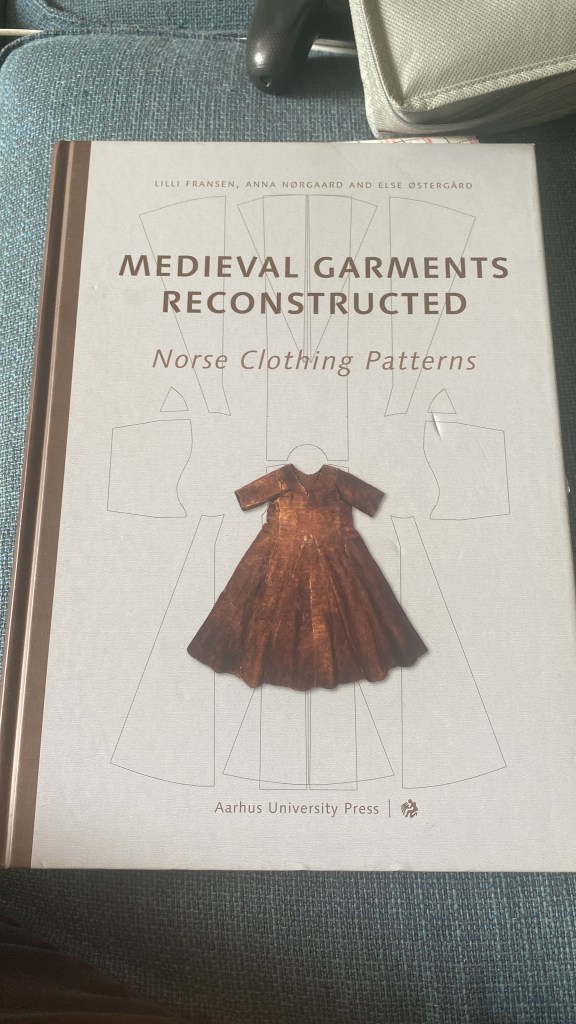
This book is more of a deepdive into making real replica’s of extant garments. At Herjolfsnes in Greenland during excavations many almost completely intact garments where found. This book provides all the information and patterns that you need to make perfect replica’s of these finds. Many techniques are provided and gives lots of insight in how precious clothing was in this period. The finds are from several era’s and are from a rather isolated place in Greenland, making it a bit hard to use this for the whole of medieval Europe. Still very insightful and useful for proper sewing techniques and details. The other book that is more about the finds and not about reconstructing them “woven into the earth” is also a very good book.
 Silk and Iron