One of the rewarding and frustrating aspects of living history and re-enactment is building your own kit and improving it. Often you find out that a certain aspect of a piece you own is just not right. Finding out you did something that is not from the period can be very frustrating, but luckily you often have a whole winter period to make small changes.
This weekend at an event someone asked me about the closure of my late 15th century dress in combination with the length of the sleeves. When I made this dress I was mostly focused on finding evidence for the stripes and I based it on this particular image. You see the stripes, the long sleeves and the smocked skirt… but now that I look closer I do not see a visible laced closure.


So I started searching for images of similar dresses from the period and their closure. Sad to say I haven’t found any long sleeved, smocked skirt dresses with this closure. One image was close, but alas, the colouring of the block print is just not done right. When you look at the line work it is visible that these are probably short sleeves and that the clothing under the dress is coloured green as well or that they are sleeves with some puffed thingie (or both).

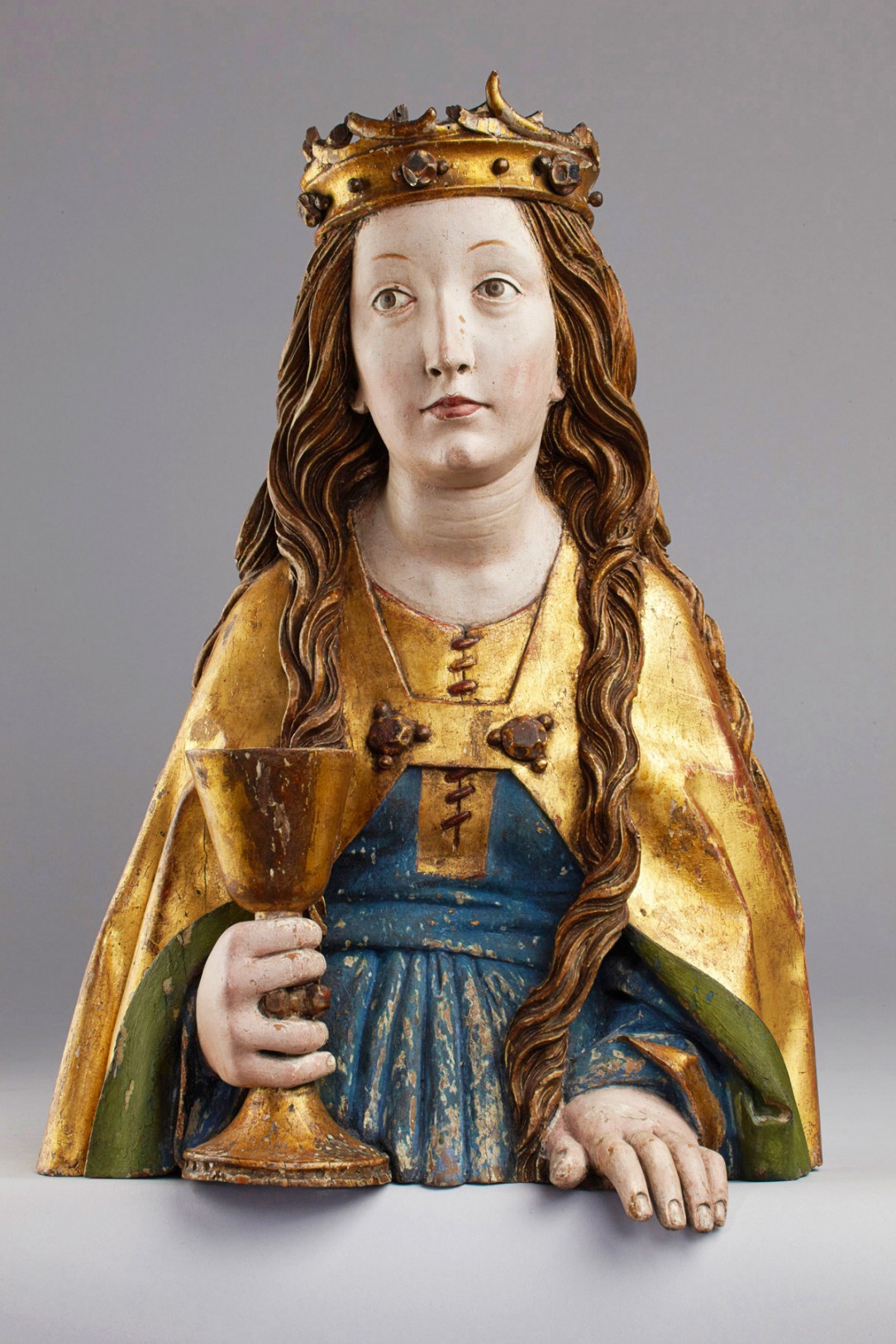
The fact that visible laced closures are a thing on kirtles with short sleeves is not enough evidence it was done on long sleeved dresses from the period. I found quite some images of front laced closures on short sleeved dresses, but not one on a long sleeved dress from the period. I did found a german statue of saint Barbara from 1490 that had a closure at the front with a lace, but it started higher on the waist. Although I am slightly disappointed in my former self for not researching the late 15th century closures, I am optimistic that I can fix this.
I have two options. The easiest is to cut off the long sleeves and make them short. With pinned sleeves this might even make a nicer look. Or I can carefully undo the eyelets on the dress and make a proper closure with eyes and hooks or metal eyes on the inside. Something I have seen very often on images from the period.
I think I will try to undo one eyelet tonight to see if this is a good option, because I find it a very nice closure. But maybe the eyelets already ripped some threads from the fabric. To make eyelets you use a piercer that pushes the threads to the side. In that case the threads can also go back to their original state.
Moral of the story: This hobby is never finished and there is always room to grow and improve your kit. Being critical of your former work is part of that process and sometimes that is hard. But when you have improved and can back that up that is actually quit rewarding! Let’s do this!
 Silk and Iron