

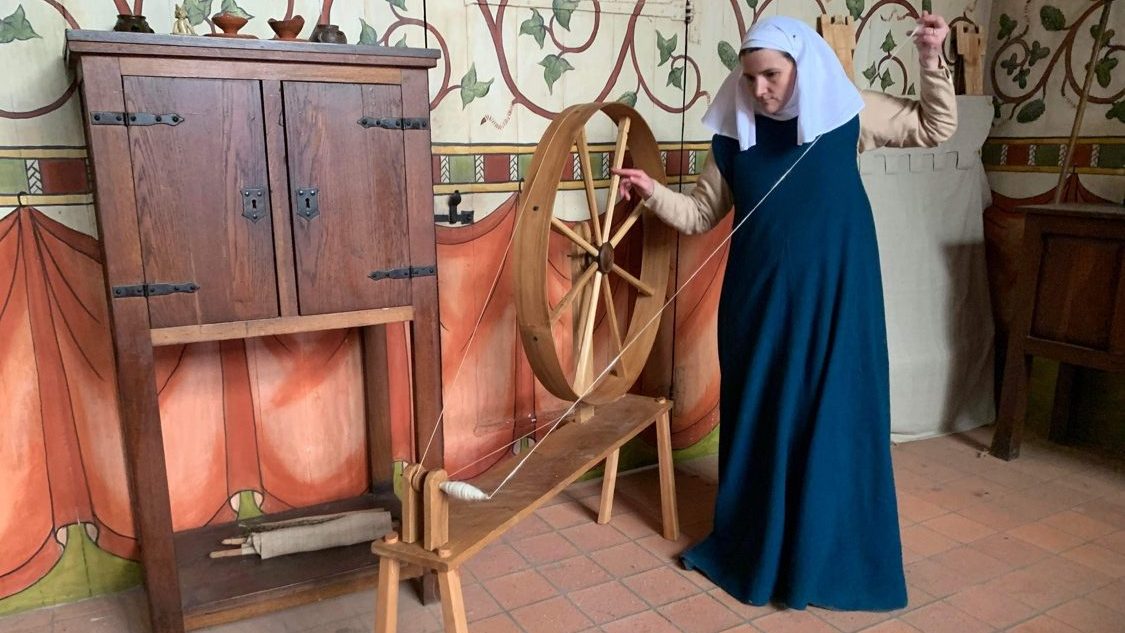
For quite some time I wanted a medieval spinning wheel. These wheels are different from modern spinning wheels because they do not have a flyer that immediately winds the spun yarn on a bobbin the moment it is spun. The spinning method is long draw and it creates a somewhat more uneven and fluffier thread than on a hand spindle.
For what I could find, the great wheel starts to arrive in western Europe around the 13th century. There are some written accounts of these wheels and their use. In the guild laws of Spiers from 1289 the great wheel is mentioned. The threads made one these wheels are only to be used as weft threads[1]. I have found quite some books about the textile production mentioning that from the 13th century on there where spinning wheels, but not mentioning these wheels are in fact great wheels. (I sometimes think that these historians knew a lot about the economic factors involving cloth production but lack knowledge of the actual process. Do the modern spinning wheels I often see at medieval re-enactments come from these books?)
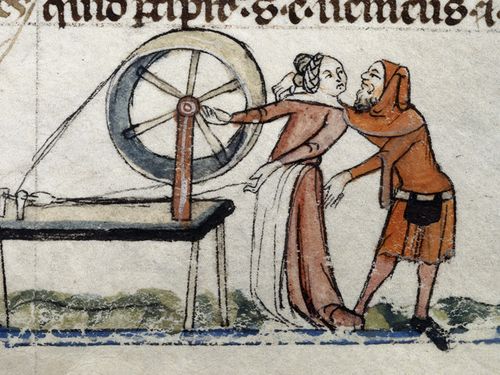
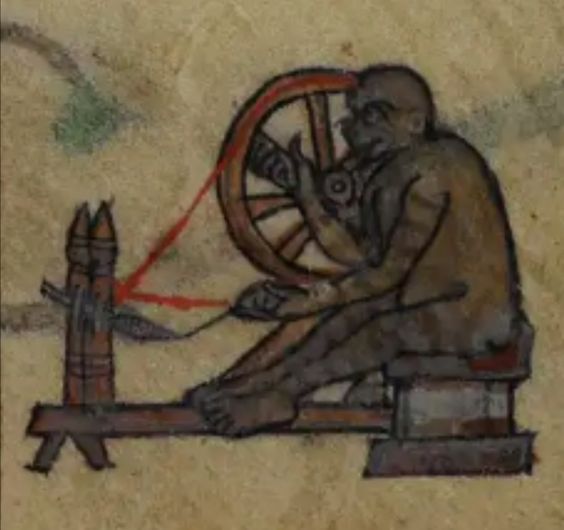
Illuminations of these wheels are the only visual sources I know of that can be used for a reproduction for the period 13-15th century. This type of wheel has been widely used through the centuries and wheels from the 18th century and later periods can still be found. Based on these newer wheels and the illuminations I made a working reproduction.

Making the wheel
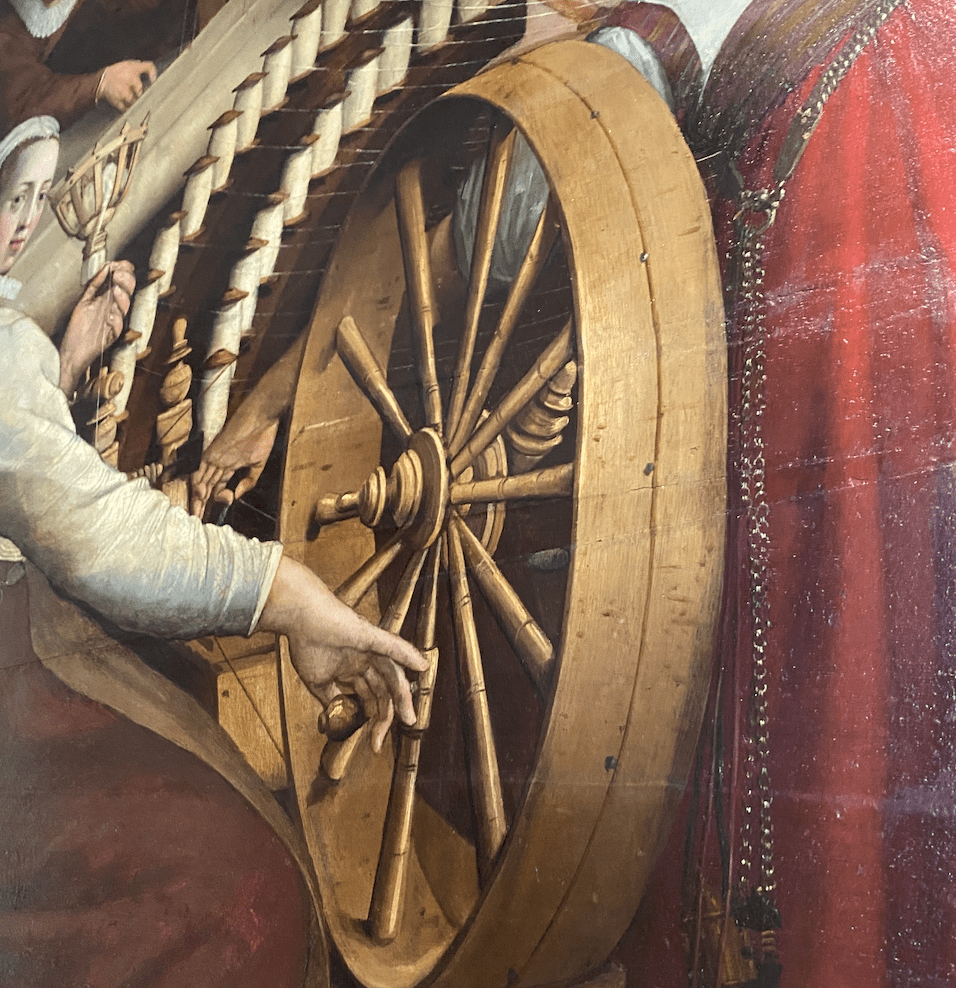
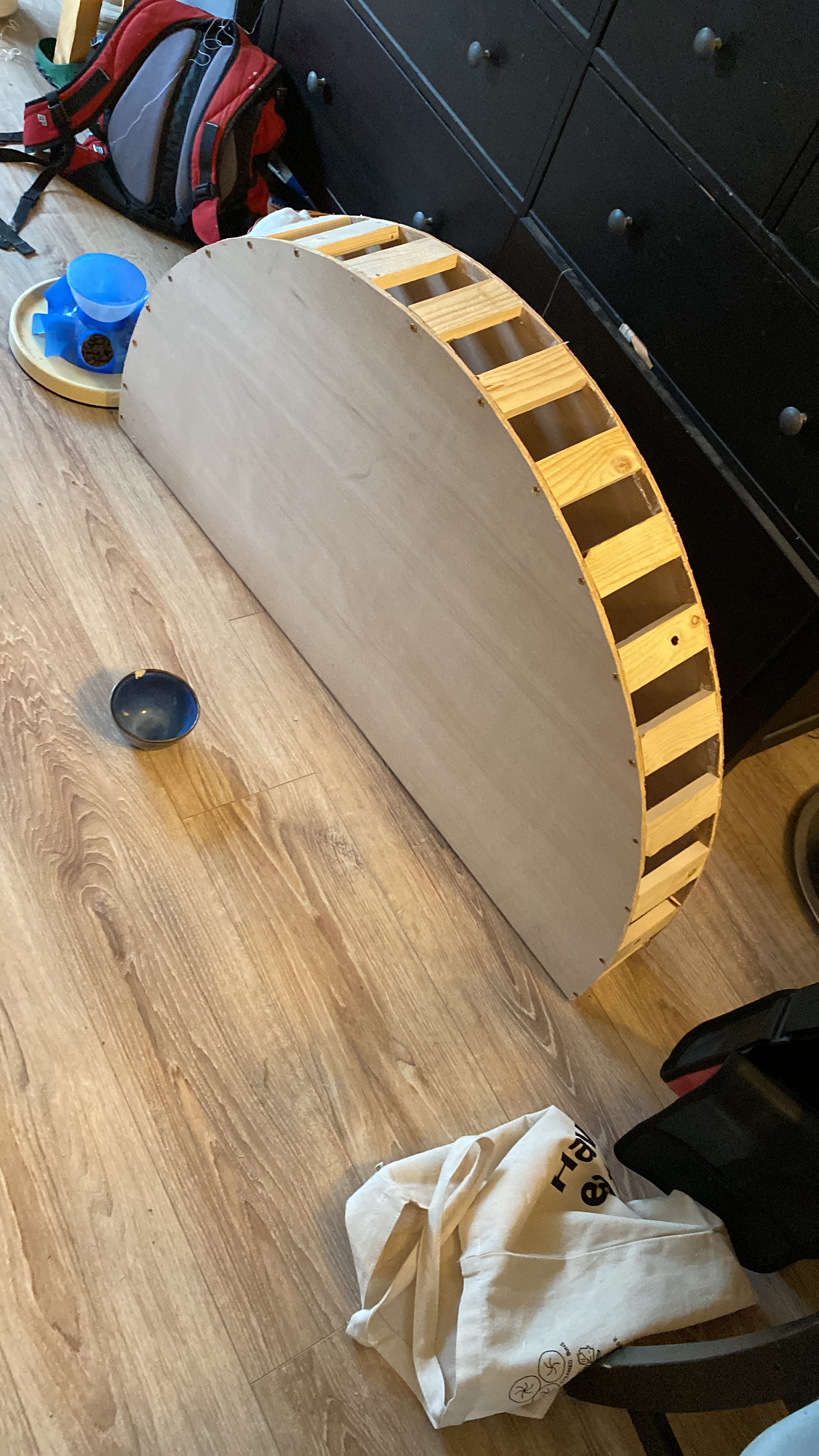
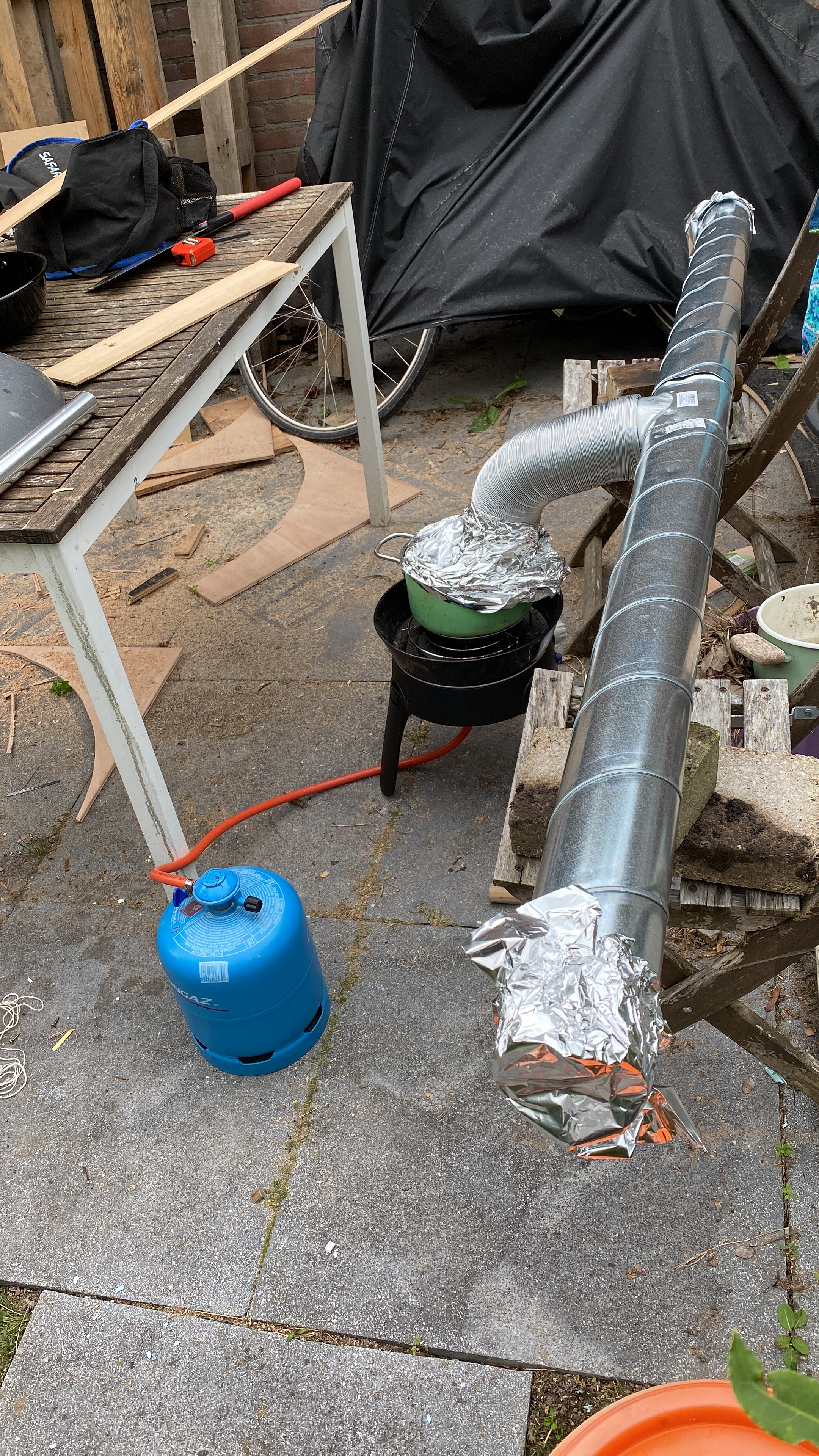
The big challenge was making a wheel. A wheel consists of spokes, a rim, and a hub. The rim of the Welsh wheel from the lakenhal consisted of two very thin long planks bend into two half circles nailed together. I decided to go for this approach as well. This meant that the wood needed to be steamed to make it flexible enough to bend it on a mold. From aluminium tubes I made a steaming installation. The mold was made from two multiplex boards cut in half circles. Between the two boards I put little planks. I left space between these planks to be able to clamp the oak planks on the mold.

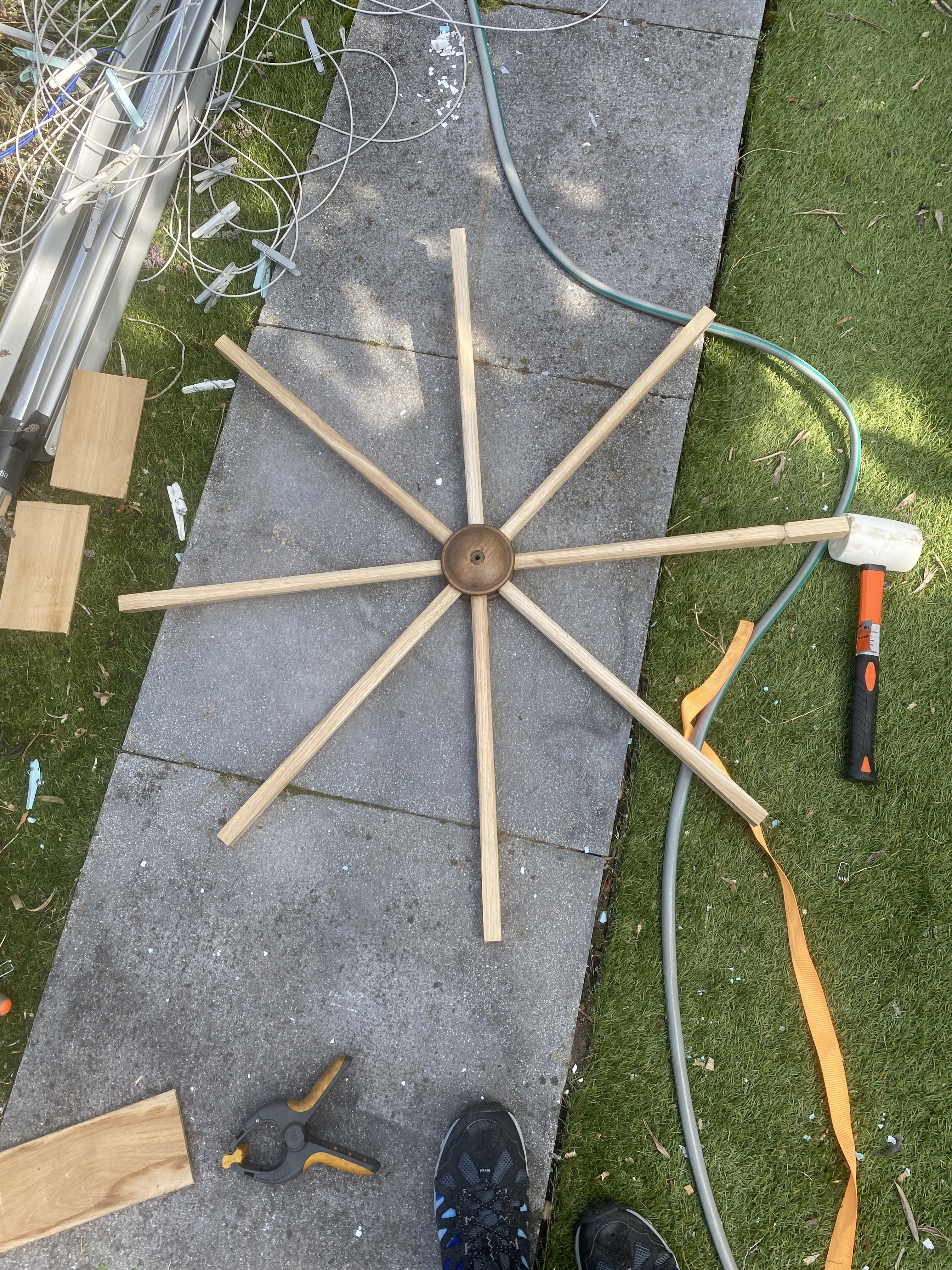

The hub was salvaged from an old spinning wheel. At the time I did not have a wood lathe yet, so this was the best option to get a good one. Wheels from spinning wheels can often be found cheaply second hand.
The spokes were made from small oak beams I bought at the hardware store. I cut them to the right size and shaved the corners to make them less square. The end that had to go into the hub was carefully cut into the right shape (round in my case)
When you measure everything right you can get a decent wheel with these steps. Yay! I used math again in my adult life!
Making the bench and spindle
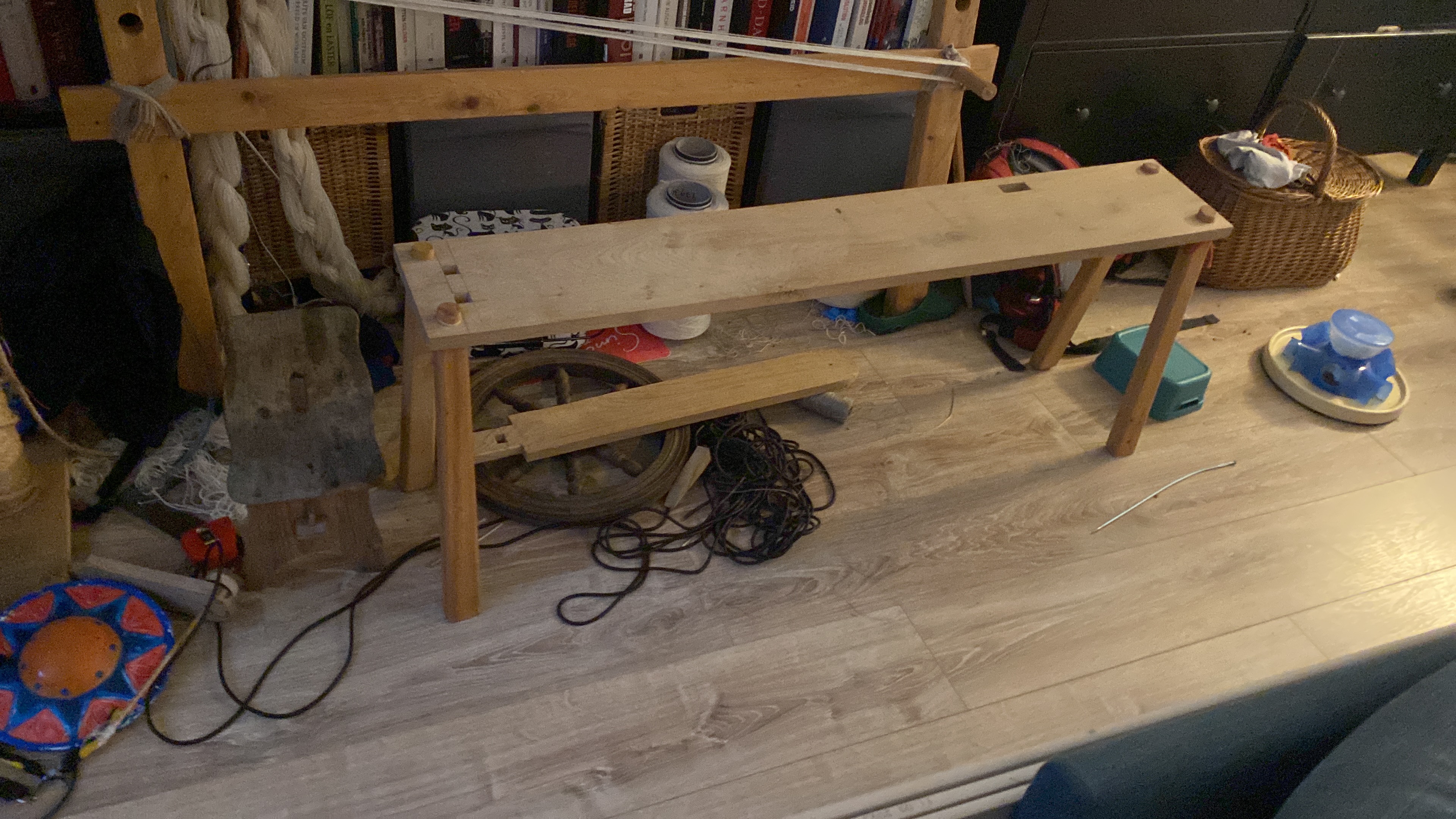
I bought two oak planks from a dedicated wood store and I used one as the bench part. In it I made four holes for the legs, two holes for the spindle holders and one rectangular hole for the beam for the wheel axis. The spindle itself is a wooden handspindle I once bought. In the wooden whorl I made crevice for the drive belt, which I made from course flax thread.

Tweaks
Over time I tweaked some stuff on my wheel. Most stuff I changed was mostly because I liked the look better and not because it spins better. The legs were first 4 beech stool legs I had laying around, but with the coming of the wood lathe this winter I made 4 oak legs. I also replaced the initial spindle holders with two turned poles with two leathers acting as spindle holders. These spindle holders resemble those from the wheel illumination in the Maastricht hours.

I still want to make a metal spindle rod instead of the wooden handspindle. I also want to make the wheel hub a bit broader as can be seen on the painting of the Laken production in Leiden. It will create a more distance between the beam of the wheel and the wheel itself.
Conclusion
I think the wheel turned out quite nicely for a first try. It works and I can spin on it. It can be taken apart so I can take it with me to events for demonstration. I love it when a plans comes together!
[1] Het spinboek. Mirjam Meertens (1978). Cantecleer.
 Silk and Iron